
Mara Berger · 6 September 2026
Navigating Performance Shifts in Digital Analytics Platforms During Infrastructure Handovers
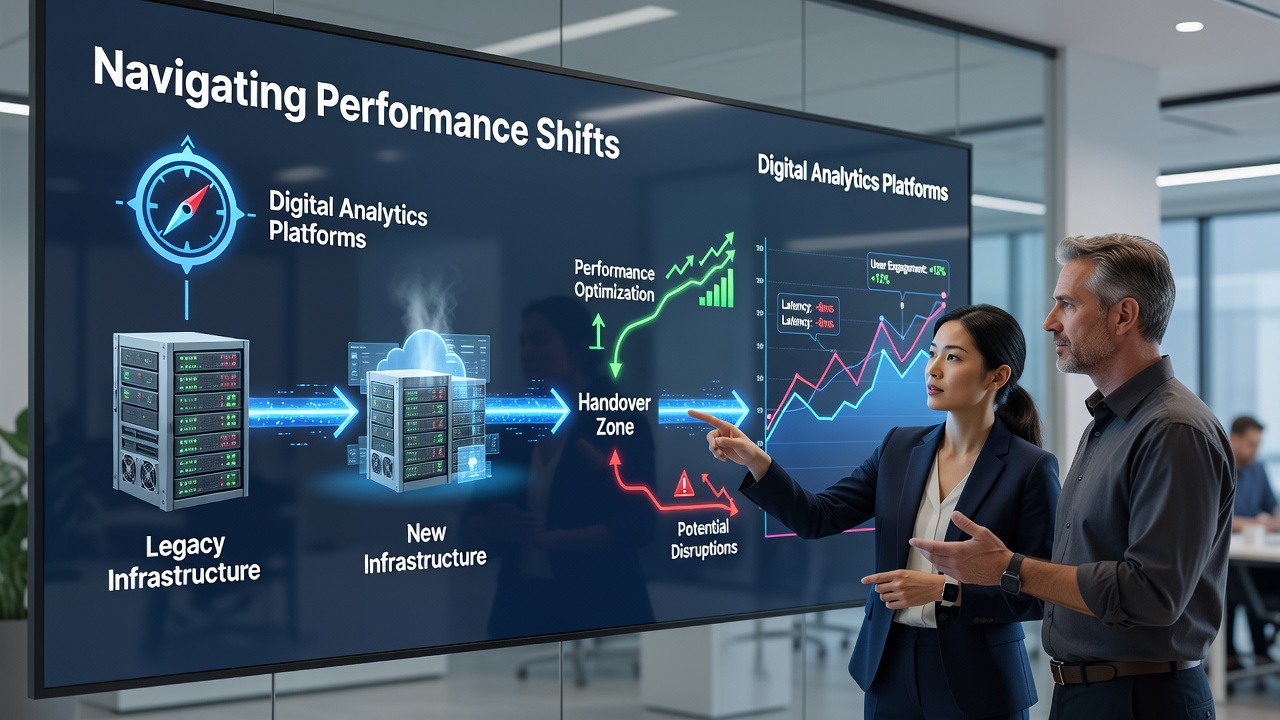
Organizations frequently encounter measurable changes in analytics outputs when they transfer data infrastructure between providers or data centers, and these shifts often stem from alterations in server response times, network latency, and data routing paths. Research indicates that such handovers can influence page load measurements, session durations, and conversion tracking accuracy because the underlying hardware and connection protocols differ from one environment to the next. Observers note that teams prepare by establishing baseline metrics weeks ahead of any migration, then they compare post-handover figures against those benchmarks to isolate genuine performance variations from tracking artifacts.
Core Causes of Metric Fluctuations
Latency differences emerge as one primary factor because new servers may route traffic through alternate network nodes, and this rerouting changes the time it takes for analytics beacons to reach collection endpoints. Data shows that even small increases in round-trip time can reduce recorded bounce rates or inflate average session lengths, while DNS propagation delays during the handover period sometimes create gaps in event logging. Those who have managed large-scale migrations report that content delivery network configurations also play a role, since updated edge server assignments alter the geographic distribution of recorded user locations and device types.
Another contributor involves cookie and identifier handling because infrastructure changes can affect how first-party cookies attach to requests or how server-side tagging implementations resolve user agents. Studies from research institutions highlight that platforms using client-side JavaScript tags prove especially sensitive to these modifications, whereas server-side forwarding setups demonstrate greater stability when the handover occurs within the same cloud region. Analysts therefore examine both client and server logs side by side to determine whether observed drops in tracked events reflect actual user behavior or simply altered data collection pathways.
Preparation Steps Before Migration
Teams begin by documenting every analytics implementation detail, including tag firing rules, custom dimension mappings, and integration points with advertising platforms, and they store this information in version-controlled repositories. They also schedule parallel tracking during a test window so that data from the legacy and new environments flows simultaneously, allowing direct comparison of identical user sessions. According to reports from the National Institute of Standards and Technology, organizations that conduct such dry runs reduce the duration of unreliable metrics by up to forty percent compared with direct cutover approaches.
Monitoring extends beyond core web vitals to encompass server health indicators such as CPU utilization, memory allocation, and database query response times because these backend metrics often correlate with frontend analytics discrepancies. People responsible for the transition configure alerts that trigger when any of these values deviate beyond predetermined thresholds, and they cross-reference those alerts with analytics dashboards to confirm causation. This layered observation method helps distinguish between genuine infrastructure improvements and temporary data collection anomalies.
Real-World Patterns Observed in Recent Transitions
One logistics company completed a multi-region cloud migration in early 2025 and recorded an immediate twelve percent rise in average page load times within analytics reports, yet synthetic monitoring tools showed no corresponding slowdown. Further investigation revealed that the new environment used a different TLS handshake sequence, which delayed the transmission of analytics payloads without affecting visible page content. The team resolved the discrepancy by adjusting the tag management system to fire events after the full page load event rather than on DOM ready, restoring metric consistency.
Similar situations have appeared in September 2026 planning documents, where several enterprises list analytics continuity checks as mandatory milestones within their handover timelines. Data from academic studies on cloud portability indicates that companies using containerized analytics collectors experience fewer interruptions because these collectors can migrate alongside application workloads without requiring DNS or CDN reconfiguration. In contrast, organizations relying on legacy JavaScript snippets often need additional weeks to validate that every custom event still transmits correctly after the move.
Post-Handover Validation Techniques
Validation begins with segment-level analysis because aggregate numbers can mask localized issues such as mobile versus desktop discrepancies or regional variations in tracking reliability. Analysts compare cohort behavior across the migration date, looking for sudden changes in user retention curves or funnel completion rates that lack supporting evidence from other data sources. They also review raw server access logs to verify that request volumes match expected traffic patterns, thereby confirming that the analytics platform receives the full dataset.
Cross-platform reconciliation provides an additional safeguard because many organizations maintain secondary measurement systems such as log-file analysis or privacy-focused tools that operate independently of the primary analytics suite. Discrepancies between these systems after the handover point directly to collection problems rather than business performance changes. Experts have observed that maintaining at least two independent measurement methods reduces the time required to restore reporting accuracy from weeks to days.
Conclusion
Infrastructure handovers continue to introduce predictable yet addressable challenges for digital analytics platforms, and successful navigation depends on thorough documentation, parallel tracking periods, and multi-source validation. Data indicates that organizations investing in these preparatory and verification steps maintain reporting continuity even when underlying server environments change significantly. As more enterprises schedule migrations for September 2026 and beyond, established procedures for isolating performance shifts from tracking artifacts become standard components of any transition plan.